Jeff Shaw
-
There’s no evidence that Søren Kierkegaard was talking about 2025 when he said “life can only be understood backwards, but it must be lived forwards.” It would, however, explain a lot. I am only beginning to comprehend all that went on in 2025, and pulling together this update has helped with that.
Many of the best moments from last year involved The Planet, Western’s student environmental magazine. I serve as The Planet’s adviser, and in 2025 the magazine won the Society of Professional Journalists national first place award for Best Ongoing Student Magazine in the country at the 2025 Mark of Excellence Awards. The student editorial team worked extremely hard, and it’s gratifying to see their hard work pay off.
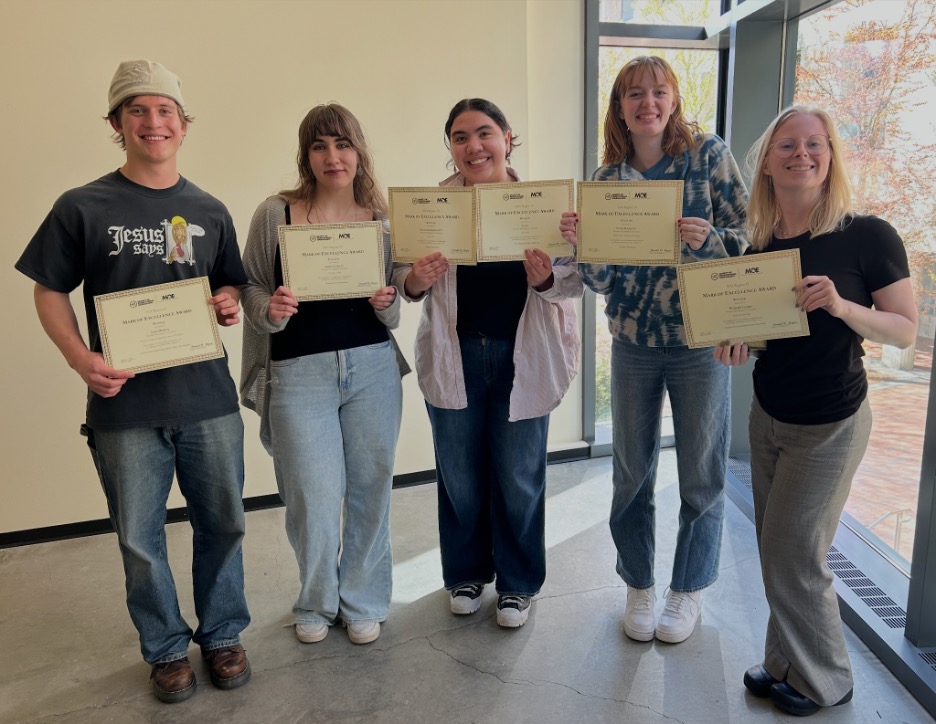
Josh Maritz, left, Tori Lehman, Julia Hawkins, Avery Robertson and Kylie Miller display some of The Planet’s awards from the Society of Professional Journalists for 2025, including the award for best ongoing national student publication. It was also a landmark year for my own academic work: I published two peer-reviewed papers during 2025 and presented work at five conferences in Bangkok, Melbourne, London, Cambridge and Philadelphia.
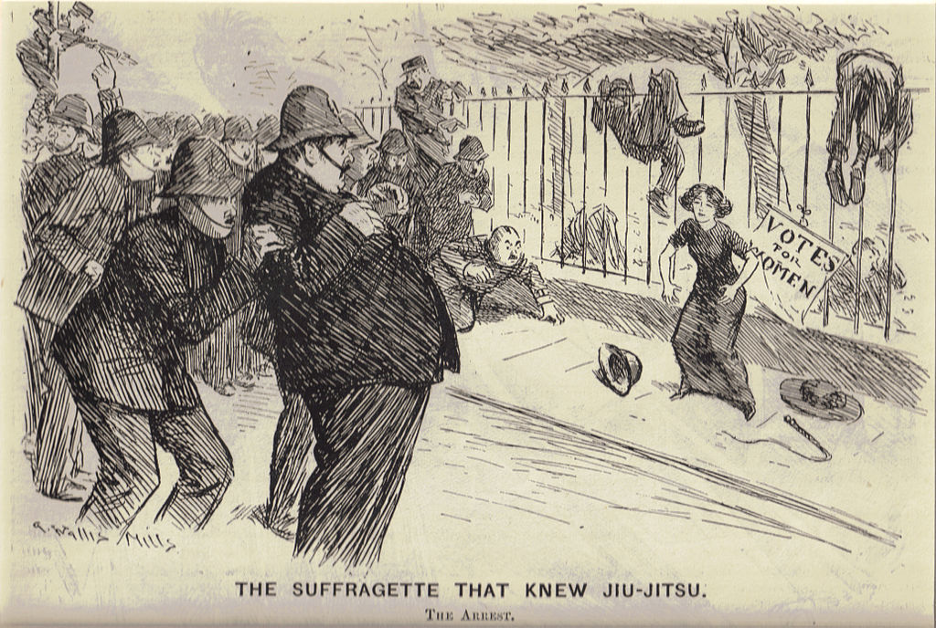
One of those peer-reviewed papers is about Theodore Roosevelt and jiu-jitsu. It focuses on the American president’s influential role in spreading Japanese martial arts, and I’m talking with the Theodore Roosevelt Center at Dickinson State University about collaborating on an event.
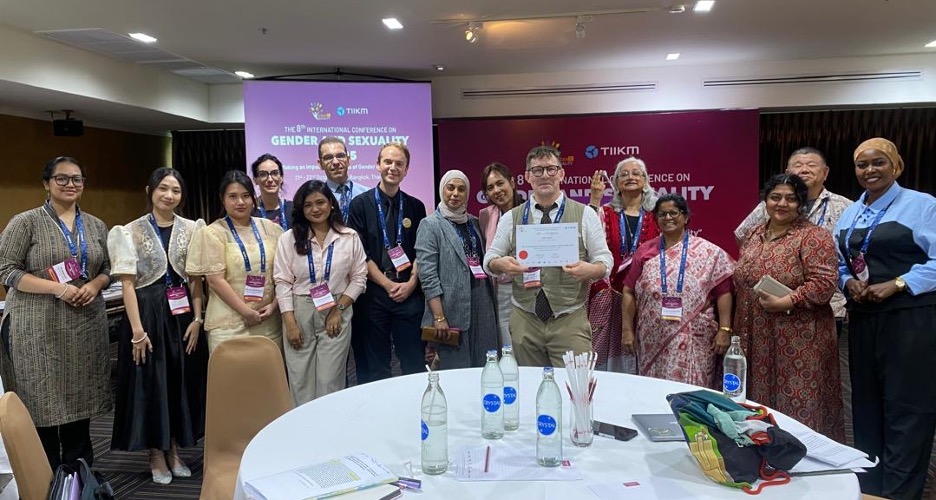
After my presentation at the 8th International Conference on Gender and Sexuality in Bangkok, Thailand. I presented about women using jiu-jitsu to fight for voting rights and combat street harassment in the early 20th century. It’s also wonderful to publish some scholarship with my favorite person. I love all my colleagues, of course, but Betsy O’Donovan and I published together in the Journal of 20th Century Media History, where we examine press coverage of martial arts from 1900-1906, a pivotal period where jiu-jitsu and judo came to the United States.
As non-tenured faculty, I deeply appreciate the opportunity to do this type of research and the university’s support for it. Now more than ever, scholarship matters, and it’s a privilege to expand human knowledge in a way that can help us understand the historical moment we’re in.
I’ll say a little more about why I think that’s important in a moment, but let’s talk about this term first. As usual, I’m teaching and advising the Planet. Instead of my regular journalism classes, though, I’m teaching an Honors Seminar in winter quarter: It’s about the history and evolution of martial arts, and how fight culture is shaped by social forces. We talk about the battlefields of Sekigahara in Japan at the dawn of the 17th century, about St. Andrew’s Hall in Glasgow, Scotland, in 1914, and the Berlin Olympics on the cusp of the Second World War. At each of these places, watershed historical events transformed entire societies — a conflict that brought Japan out of feudalism, a movement that helped British women win the vote, a sporting event that staged the battle lines against fascism — and martial arts played a critical role each time.
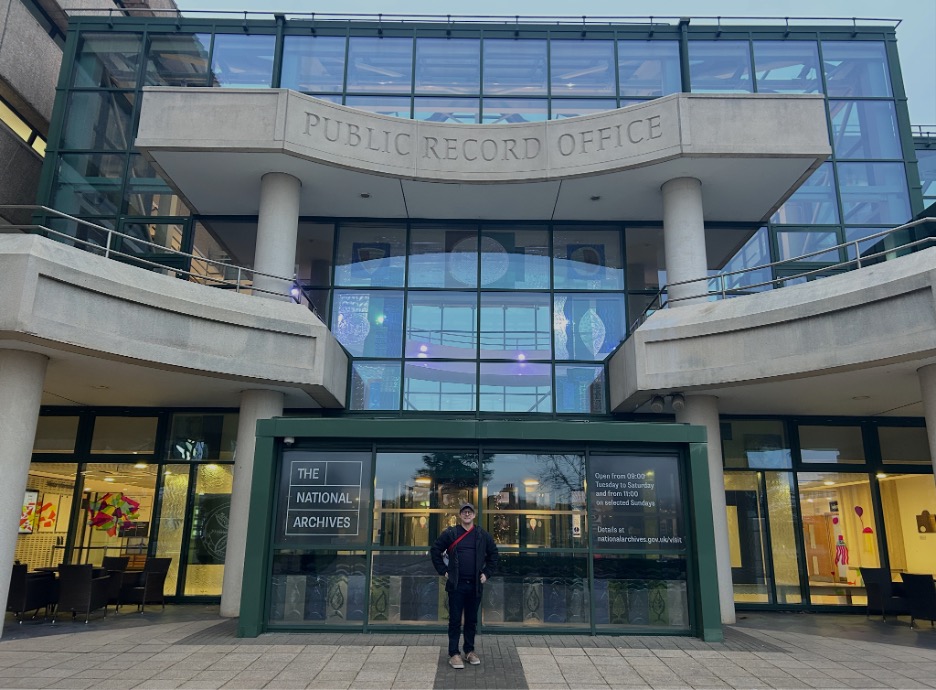
At the British National Archive in London, researching suffragists’ use of jiu-jitsu. I’m grateful to Western’s Office of Research and Sponsored Programs for the mini-grant I received this year. It allowed me to travel to the British National Archive, where I examined fascinating documents related to the suffragettes in England at the turn of the last century and how they used jiu-jitsu to fight (literally) for voting rights. This research informs the class, and is fuel for future papers.
When I posted about this class, the response from people all around the world was inspiring. I developed an online version of class, too.
Aside from being an avid practitioner of the art, I’m doing that all for one simple reason: Understanding jiu-jitsu is important.
I’m talking about the martial art itself, of course, but also the social forces that surround it, that shape it and are shaped by it in turn. With the Ultimate Fighting Championship — a multi-billion-dollar business founded by jiu-jitsu athletes — hosting a card at the White House for the country’s 250th anniversary, these issues could not be more timely.
Besides academic courses, I’ve also been teaching jiu-jitsu around the country, including right here in Bellingham. Alongside some friends from Bellingham BJJ, I did a free self-defense workshop for the LGBTQ Center at Western, and another free jiu-jitsu workshop for military veterans and their families. We took that show on the road to do a free self-defense seminar for Planned Parenthood activists at Auburn University. My friend Pete McGregor, who is one of the world’s foremost experts on adaptive grappling and martial arts for people with disabilities, will come to campus for a panel discussion and workshop with the Institute for Critical Disability Studies on Jan. 20.
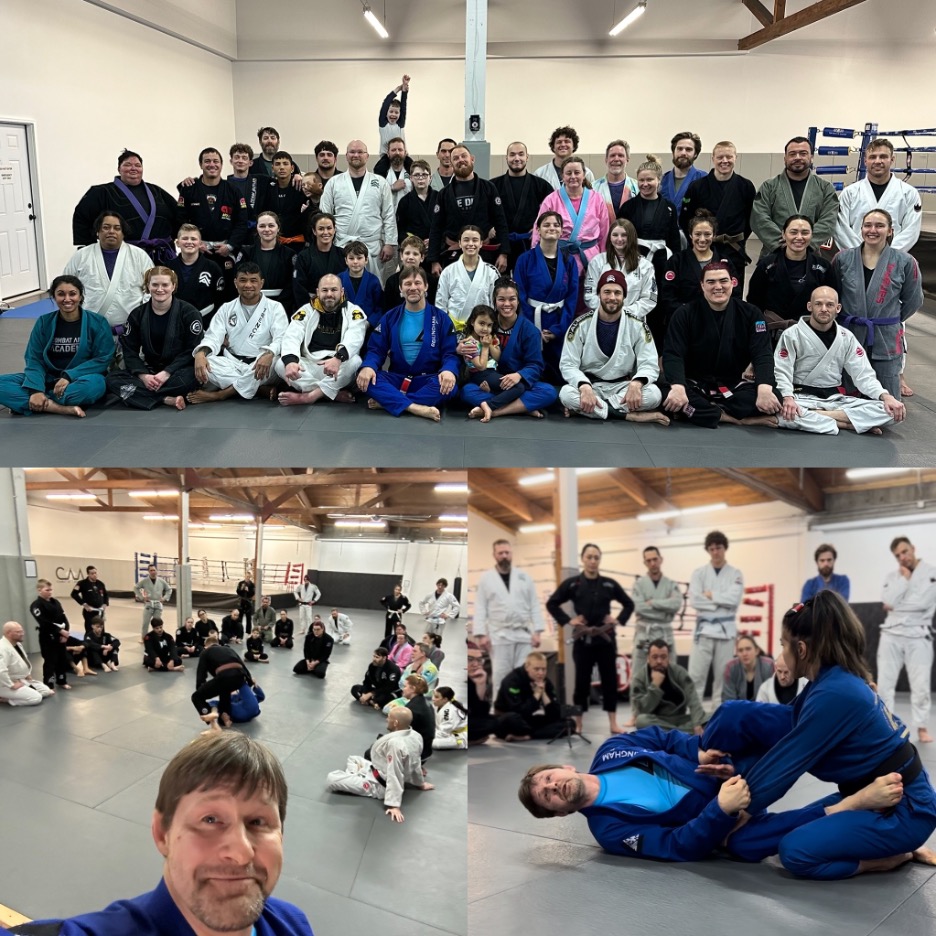
Teaching a jiu-jitsu seminar at Combat Arts Academy in Seattle. 
We did a series of free events featuring LGBTQ+ martial artists, including self-workshops.
In addition to these community events, I also taught two jiu-jitsu seminars at martial arts schools in Seattle, and I’m headed to Louisville, Kentucky in April to teach another. It’s also been a busy year of media appearances in the jiu-jitsu community. I’m a regular on the BJJ Mental Models podcast, and appeared on two other martial arts podcasts (Rise to Thrive and Business of Jiu-Jitsu) to talk about my academic work on identity formation. A group of friends and I also launched the Fighting Matters podcast, where we talk about how politics interfaces with the combative arts.
One final note: One of the best things I’ve done with my life is help found the Women’s Debate Institute, a non-profit academic debate camp that just marked its 25th anniversary.WDI offers free, high-quality debate education to young women from around the world, and promotes a more gender-inclusive environment designed to advance educational and professional opportunities for debaters.
Watching this camp, which was founded right here in Bellingham, grow into an international phenomenon that has served thousands of young leaders is more than a dream come true. It’s the kind of thing – to come back to my man Kierkegaard – that you can understand only in retrospect.
You can always be grateful, though. Kierkegaard didn’t say anything about that. I’m grateful for everyone who keeps our department running (Colleen and Jennifer!), for everyone who has supported the projects I wrote about, for all the folks who have taken my classes, and to you, for reading this. May 2026 be better than 2025.