
Visual journalism graduate brings photojournalistic-style storytelling to marketing
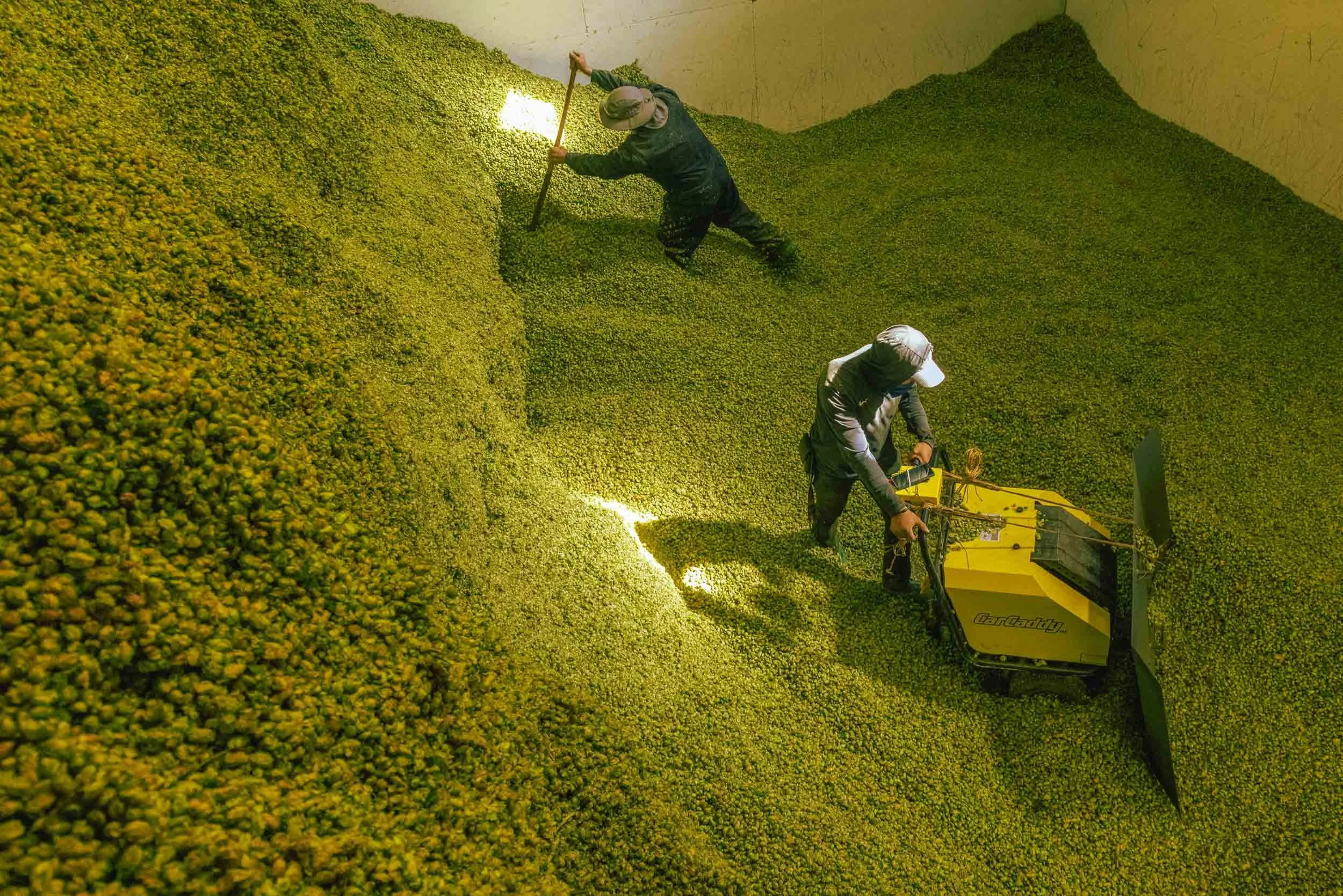
Farmers relocate hops into a storage facility and level the crop as it accumulates in large piles. Hops are a key ingredient in beer production. // Photo by Jake Parrish
Jake Parrish helps the hop industry move beyond commercial photography and toward authentic brand narratives
Story by Allie Van Parys
Jake Parrish, a 2015 visual journalism graduate, combined his editorial expertise with commercial photography to bring his storytelling skills to the marketing industry.
Parrish’s father gifted him his first camera for his 16th birthday and since then, he knew he would go into photography. He first focused on portraiture projects – those where he could explore the medium and his creative vision.
When he first came to Western, he wanted to go into fine art photography but he soon discovered the visual journalism program and knew it would be the right fit.
“Sophomore year I took photojournalism with the one and only John Harris,” Parrish said. “Love that man.”
Harris, a journalism professor who retired in 2025, was instrumental throughout Parrish’s degree trajectory.
“He opened my eyes to the world of photojournalism,” Parrish said, referencing Harris.
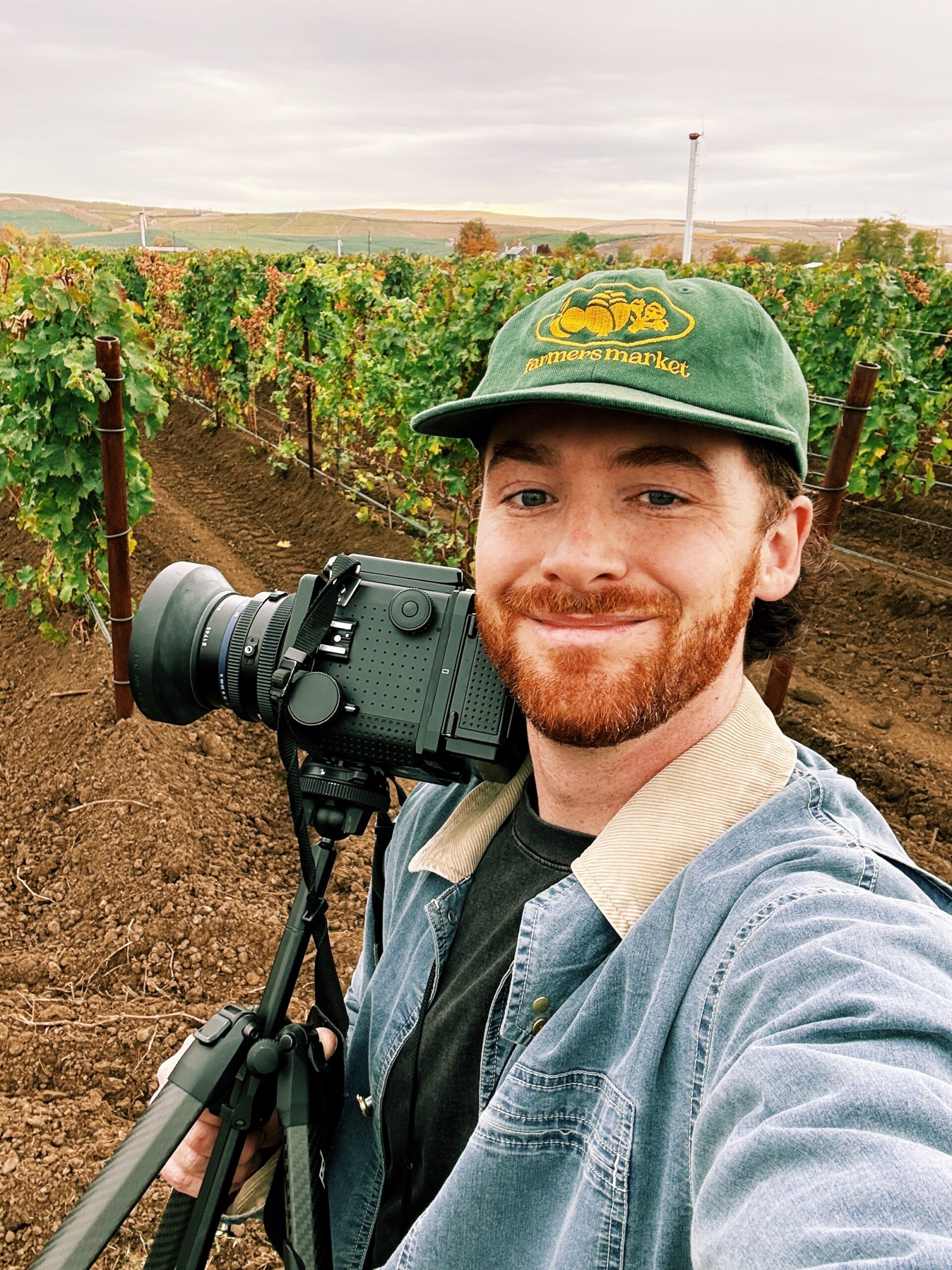
Jake Parrish smiles with a camera in front of hop fields. He is currently an associate creative director for John I. Haas, the largest hop production company. // Photo by Jake Parrish
Immediately after graduation, Parrish got his first full-time job as a staff photographer, and later the chief photographer, at the Coeur d’Alene Press in Idaho. This publication covers the majority of Northern Idaho, and Parrish noted that he was “thrown to the wolves” in starting this position.
“You have no guardrails out of school,” Parrish said. “Now my photos are ending up in the newspaper and I’m seeing them, other people are seeing them and that was truly eye opening for me.”
Following the Coeur d’Alene press, Parrish joined the Yakima Herald-Republic as a staff photographer. The Yakima Herald-Republic was a bigger newspaper, bigger coverage area and had a larger staff to cover in-depth journalism projects, Parrish said.
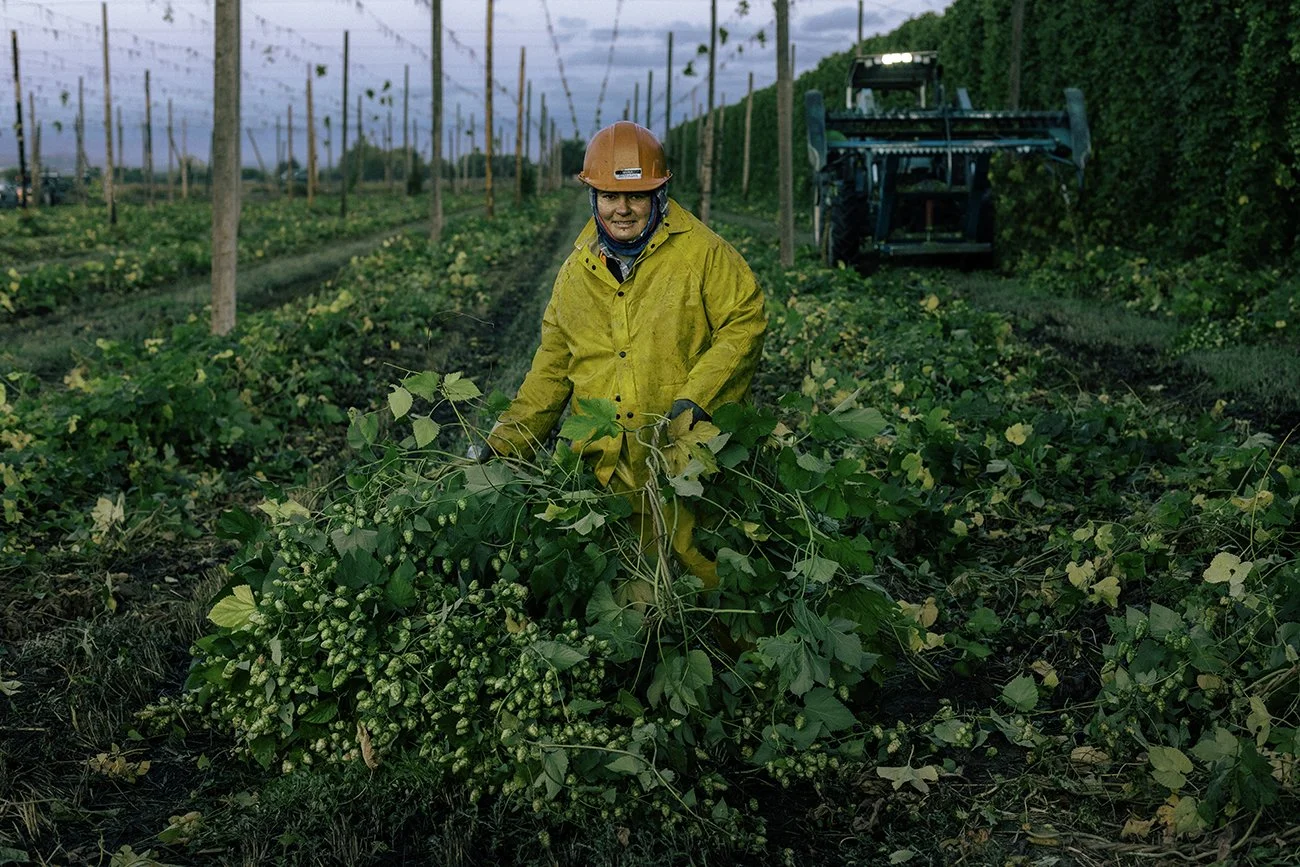
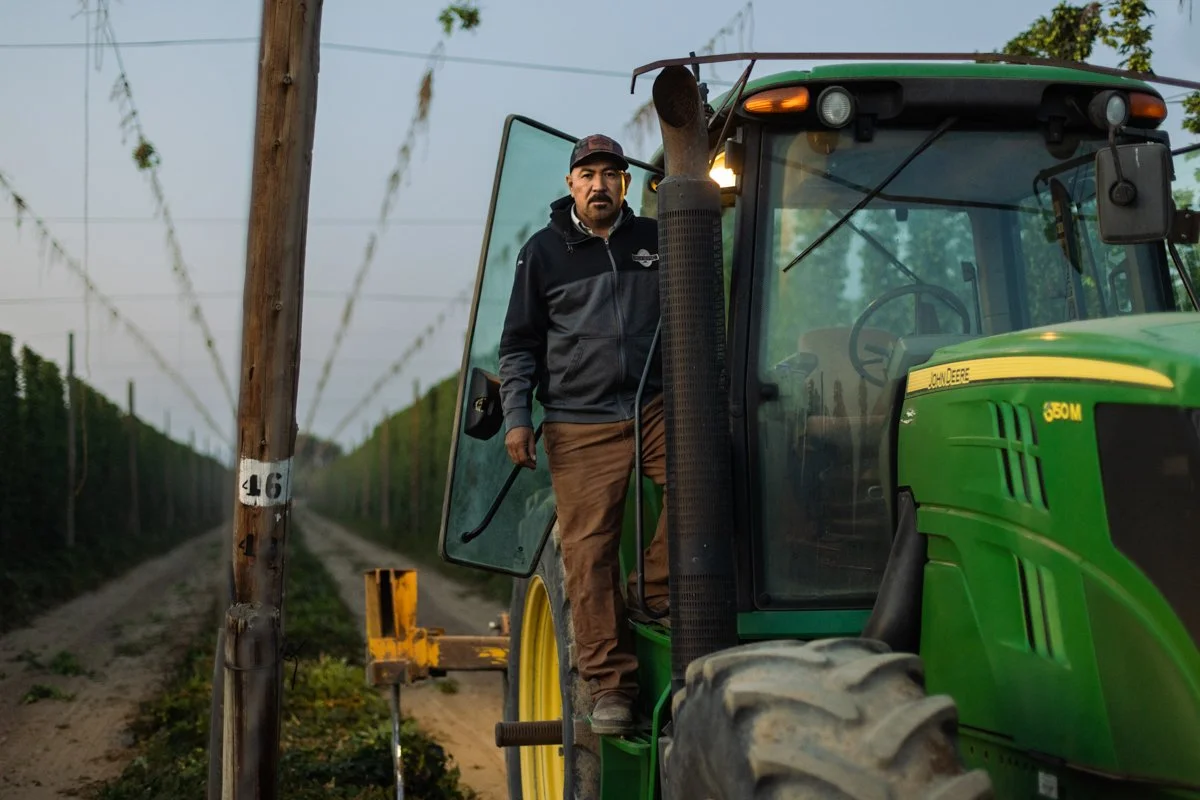
Since leaving the editorial industry, Parrish has noticed a shift in the journalism employment climate.
“When I left the Yakima Herald, there were three photographers on staff. Now, there’s one,” Parrish said.
The Yakima Herald has also reduced their staff numbers and their area of coverage. Additionally, the Cour d’Lane Press used to be a daily newspaper. Now, it is printed twice-weekly, Parrish said.
“Journalism is extremely important for a lot of different reasons,” Parrish said. “Unfortunately, the trust in journalism has diminished significantly in the public eye.”
Parrish explained a situation while photographing a Trump rally before he was elected into office the first time.
“He had everyone turn around and flip us (the press) off,” Parrish said.
He also touched on the issue of using artificial intelligence in journalism. Parrish has noticed AI-generated photography that has been displayed as human work, and that makes him especially nervous for the future of the trust in media.
“It’s hard not to be negative,” Parrish said. “But I do have full faith that the power of journalism will be long-lasting in the public eye. I think it’s one of the most powerful things we have as a society.”
Parrish has noticed that Gen-Z is drawn to the analog style of technology and that this will eventually carry into the public’s view on journalism. Parrish is confident that people will re-learn what journalism does for people.
“Don’t lose faith in what you’re doing,” Parrish advises. “Even if you take the skills you learn in the journalism department and you end up doing something different in your career, those skills that you learn are invaluable, and they will carry over into anything you do in your life.”
Parrish encourages more people to pursue journalism and commends the Western journalism department for educating passionate, hardworking journalists.
“I want to extend my thanks to the Western journalism department,” Parrish said. “And Go Viks!”