Scott Terrell
-
When I retired from The Skagit Valley Herald in March 2019, I was gifted a book, “Modern Cider,” by Emma Christensen. It sat on my bookshelf, collecting bookshelf dust for 4 ½ years.
In late September 2023, I joined a group of volunteers in helping Gary Moulton, a fruit garden manager and grower, harvest his perry pears. Perry pears are the pear equivalent of cider apples. And perry is basically pear cider.
We picked around three bins (2500 pounds) of the Hendre Huffcap pears by lunchtime and sat down for some pizza. Gary and another individual broke out a couple bottles of chilled perry and cider. The pizza was satisfying, but the beverages were eye-opening: clear, crisp, fizzy, dry tasting, with a hint of fruit, teasing the tastebuds and tempting the nose.
A few days later, I grabbed “Modern Cider” off the shelf and dug in. Turns out the book is a well-written “how-to,” describing the basics of making cider, the equipment needed, followed by several recipes and variations on cider and other fruity delightful beverages.
Cider making requires some basic equipment. Fortunately, there is a brewing supply business, Northwest Brewers Supply, in Burlington, Washington, 10 minutes from my home in Bow.
Three years in, I’m getting the hang of it. Making cider is legal in all 50 states. Most limit it to 100 gallons a year. I’m in the 5-to-6-gallon range. My concoctions are combinations of juiced apples: usually a combination of apples that are sweet, sharp (acidic) and tannic (their pucker factor). I keep notes on what varieties I use, the percentages of each variety per batch, the alcohol percentage and what dates I press, ferment, and bottle. That goes for the yeast as well. There are dozens of yeast varieties with names like Nottingham Ale, Safcider champagne, White Labs WLP775.
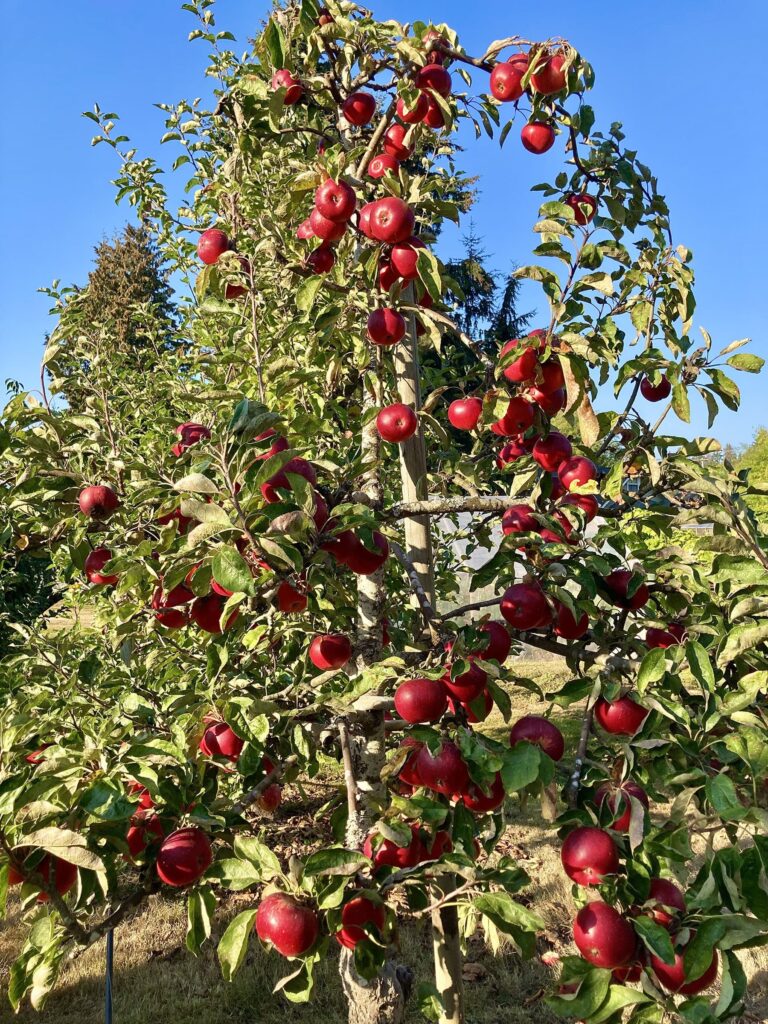
The juice comes from my big backyard fruit orchard. I grow mostly apples, plus several varieties of pears, and plums and berries as well. Any student who has taken a fall newswriting or photo-j class from me has tasted some of the apples I grow, because I often bring a couple dozen to class.
Ah, yes. The apple orchard. That’s another story.